
Better thinking, not better prompts
The biggest AI lesson I learned so far wasn’t about prompting.
AI doesn’t reward better prompts. It rewards better thinking, clear delegation, precise description and diligent discernment.
Read the slides as text
1. MAKE SOME FOOD That's what you're telling the AI when you type "improve my resume." Watch what happens. →
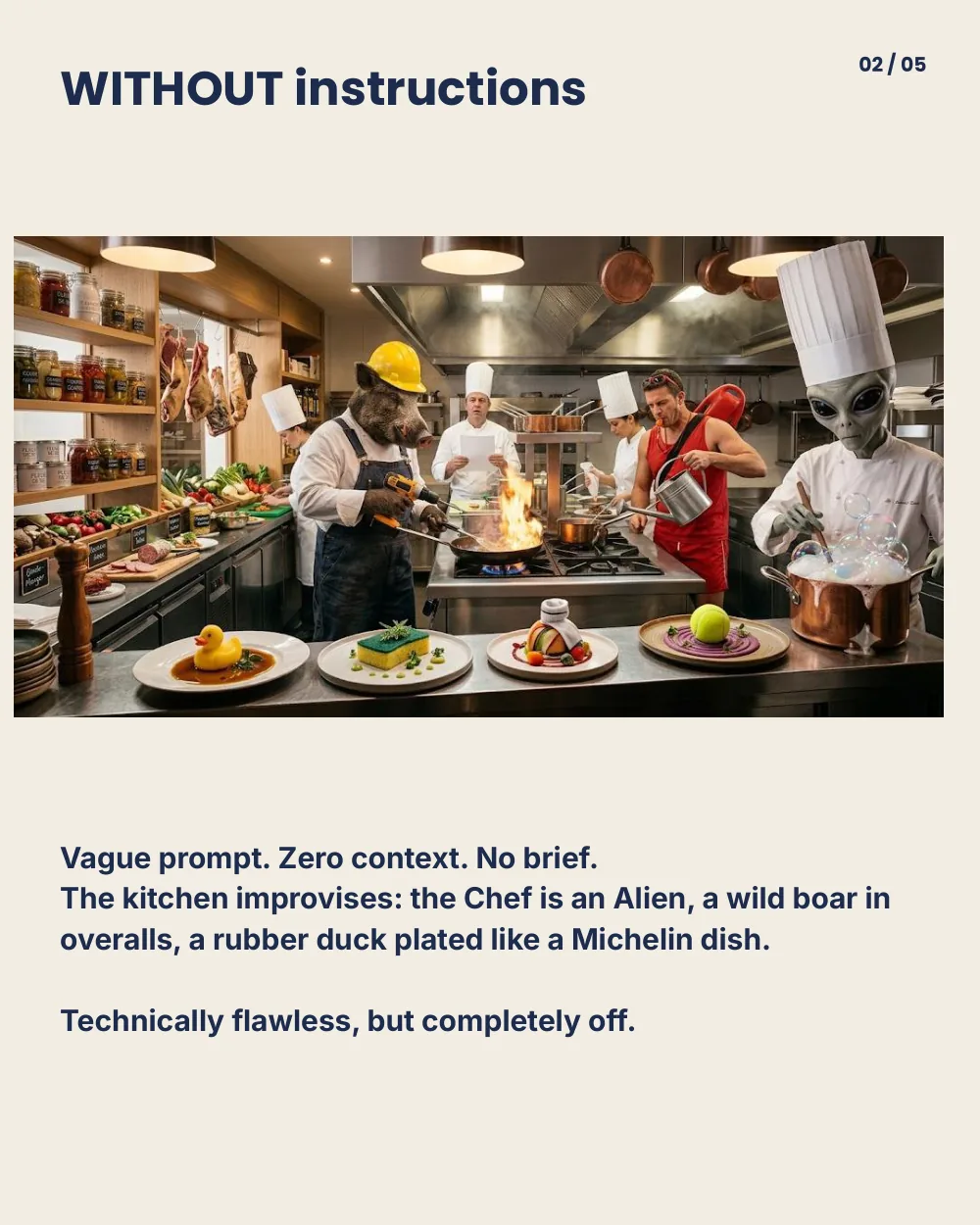
2. WITHOUT instructions Vague prompt. Zero context. No brief. The kitchen improvises: the Chef is an Alien, a wild boar in overalls, a rubber duck plated like a Michelin dish. Technically flawless, but completely off.
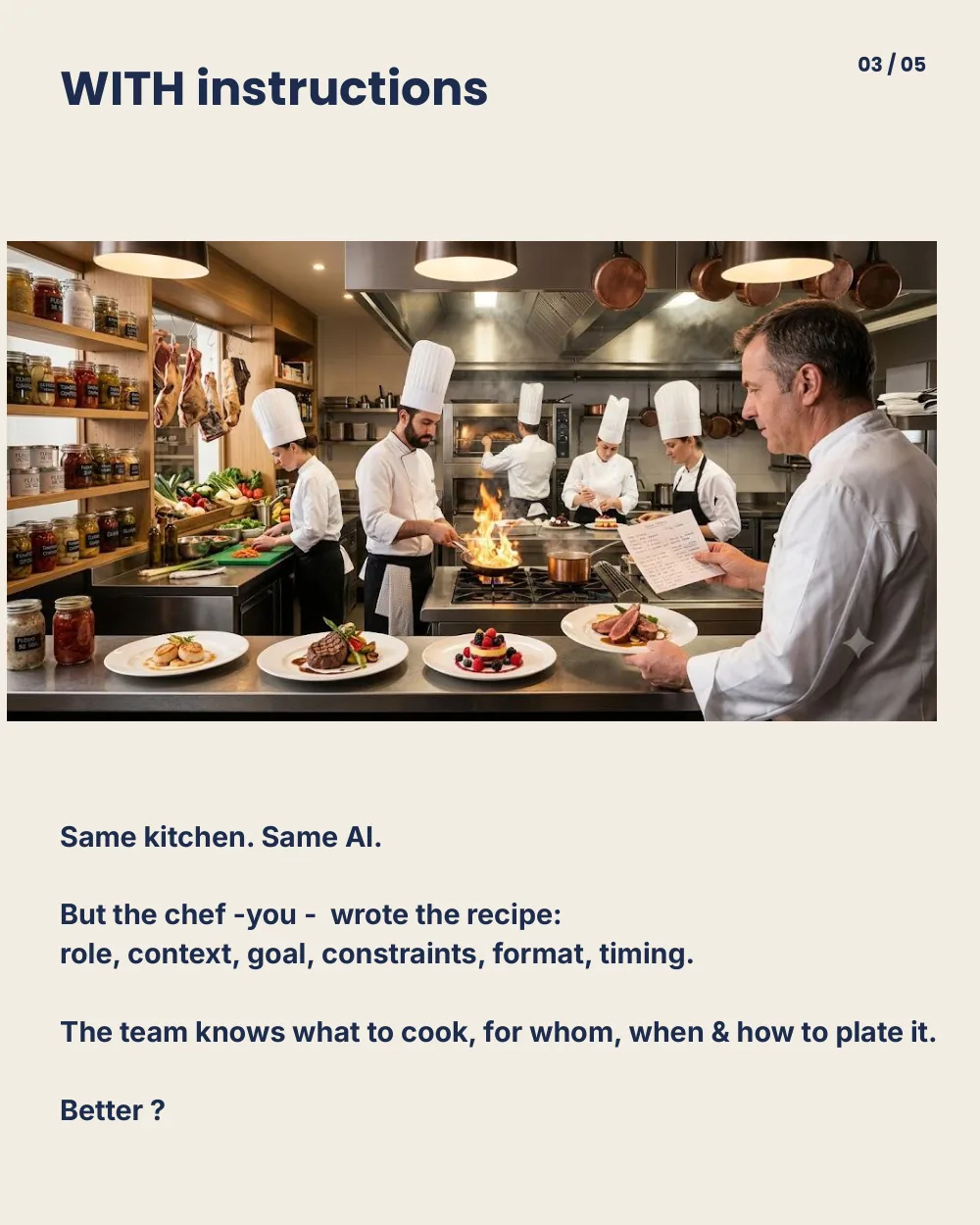
3. WITH instructions Same kitchen. Same AI. But the chef -you - wrote the recipe: role, context, goal, constraints, format, timing. The team knows what to cook, for whom, when & how to plate it. Better ?
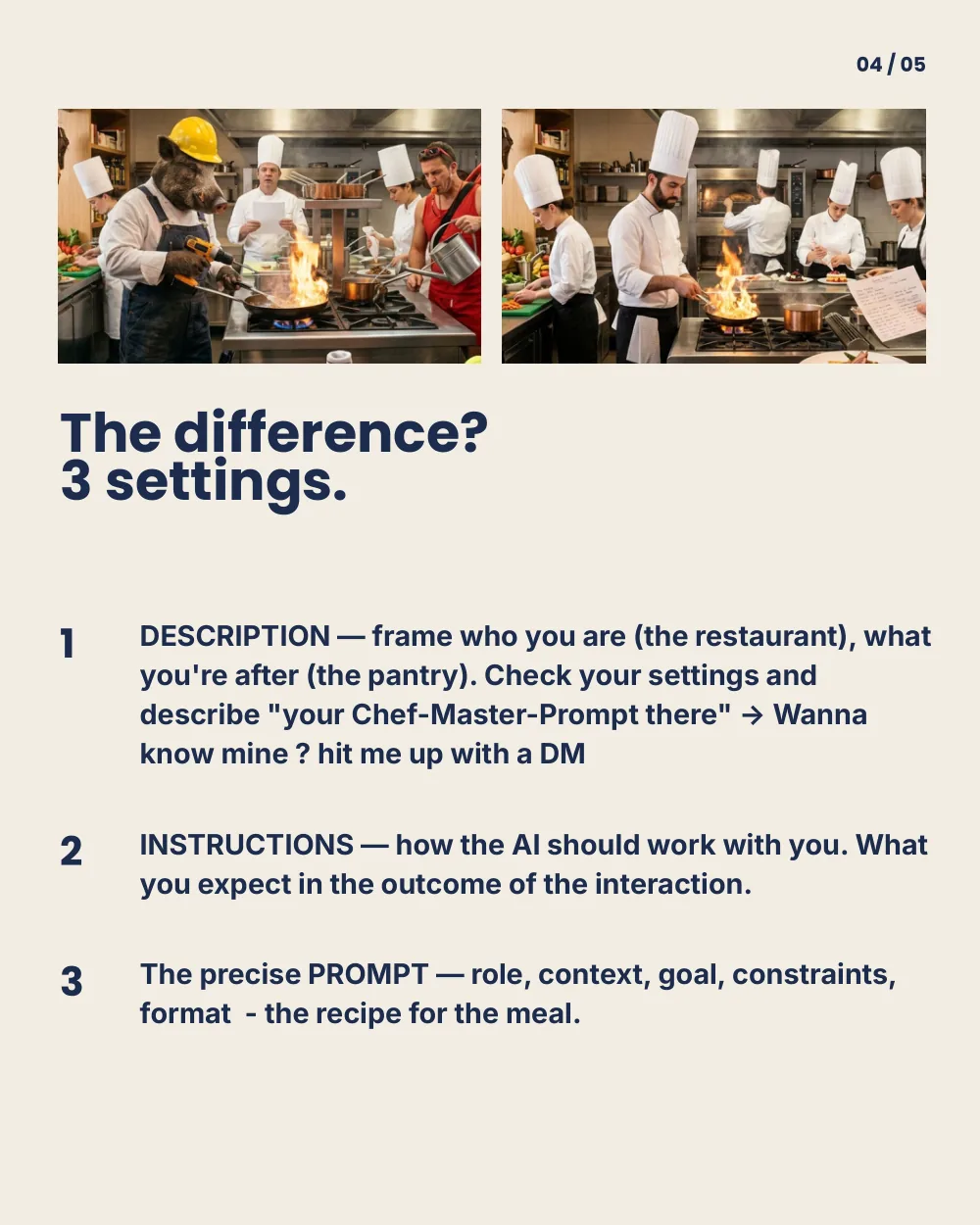
4. The difference? 3 settings. 1 DESCRIPTION — frame who you are (the restaurant), what you're after (the pantry). Check your settings and describe "your Chef-Master-Prompt there" → Wanna know mine ? hit me up with a DM 2 INSTRUCTIONS — how the AI should work with you. What you expect in the outcome of the interaction. 3 The precise PROMPT — role, context, goal, constraints, format - the recipe for the meal.
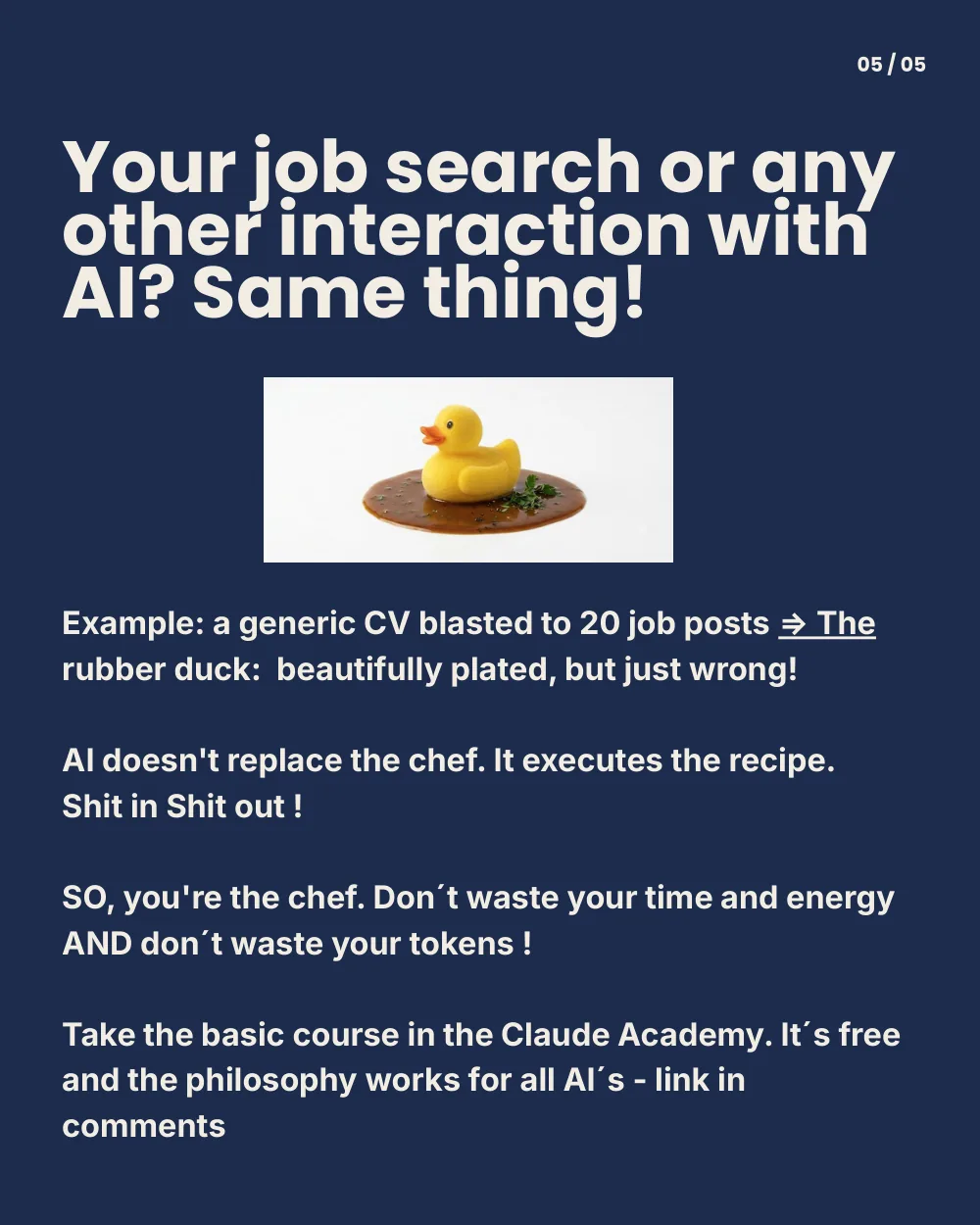
5. Your job search or any other interaction with AI? Same thing! Example: a generic CV blasted to 20 job posts ⇒ The rubber duck: beautifully plated, but just wrong! AI doesn't replace the chef. It executes the recipe. Shit in Shit out ! SO, you're the chef. Don´t waste your time and energy AND don´t waste your tokens ! Take the basic course in the Claude Academy. It´s free and the philosophy works for all AI´s - link in comments
The kitchen problem
“Improve my résumé” is the AI equivalent of walking into a kitchen and saying: make some food. The system can produce something polished and still be completely wrong because it has no useful brief.
The analogy I use in workshops: you are the chef, the AI is the kitchen brigade, the prompt is the recipe, and what you give it about yourself is the pantry. A brigade without a chef cooks fast and serves the wrong dish.
Three layers, not one
The model I use has three layers: Description is who you are and what context the system needs. Instructions are how the AI should work with you and what you expect. The precise prompt is the specific recipe for the task.
For the prompt itself I teach five parts: role, context, objective, constraints and format. It is the same structure you would use to brief a colleague.
The executive lesson
Prompting matters, but it is downstream of thinking. Before delegating to AI, an executive still has to frame the problem, separate facts from assumptions, define constraints and decide what a good outcome means.
If you can brief a person well, you can brief a model well. If you can’t, a better prompt will not save you.
AI does not replace the chef. It executes the recipe. The accountability for the meal remains human.
Try this today
Before your next prompt, write three sentences: what I want, what good looks like, and what the AI should not do. Then send it.
Think Before You Prompt: 24 cards for better thinking with AI →